Most people picture knighthood as one quiet moment: a sword near a shoulder, a title announced, a room holding its breath. That image is powerful, but it blends together several very different things. A medieval fighting status, a literary ideal, a modern honour, and a ceremonial scene are not interchangeable—even though they share a long history.
Knighthood has changed meaning over time. In medieval Europe, a knight was generally connected to military service, equipment, status, and household or lordly relationships that varied greatly by place and period. In the United Kingdom today, a knighthood is part of an honours system that recognises service or achievement. Neither definition tells the whole story by itself.
This page separates those meanings so that a reader looking for medieval knight training does not receive modern honours advice, and someone wondering about a current knighthood does not receive a fantasy version of the Middle Ages. For a literary court of knights, see Knights of the Round Table. For the wider history of ideals associated with knights, see Chivalry History.
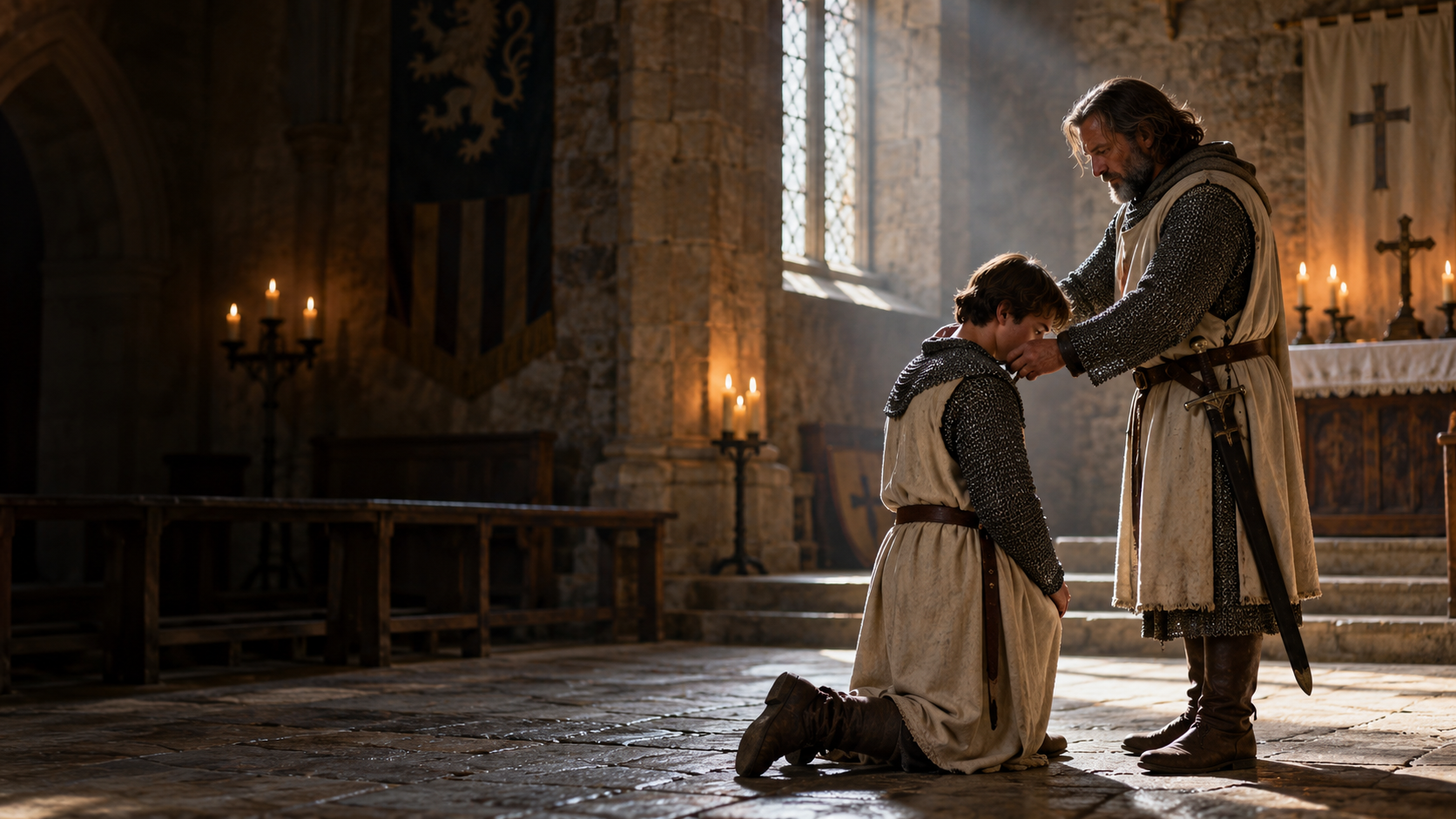
What does knighthood mean?
In the medieval sense, knighthood referred to a place within a military and social world. A knight might serve a lord, maintain equipment and horses, fight as a mounted man-at-arms, belong to a household, or hold land under particular conditions. The exact combination differed. It was not a single job title used uniformly across all of Europe for centuries.
The Metropolitan Museum of Art explains that mounted warriors became important forces in medieval armies, while the ways their service and loyalty were arranged could include fiefs, wages, household service, kinship, and friendship. Its key caution is useful: medieval life does not fit one neat diagram. Feudalism and Knights in Medieval Europe is a strong overview for that context.
In the modern UK sense, a knighthood is an honour. It may permit an eligible recipient to use a title such as Sir or Dame, depending on the honour and the person’s status, but it does not create a medieval military role or hereditary lordship. The GOV.UK overview of honours explains the current categories and recognitions more reliably than social-media shortcuts do.
Medieval knighthood was not one fixed route
The popular page–squire–knight ladder is a useful starting picture, but it should not be treated as a universal rule. Young people in some elite households could learn riding, weapons, manners, religion, and service under supervision. Others entered military life through different arrangements. Wealth, family position, local custom, warfare, and patronage mattered.
Even the word “knight” can create a false impression of uniformity. The Met notes that not every person in armour was a knight, and that not every knight occupied the same social position. A campaign also depended on attendants, craftspeople, horses, food, transport, and foot soldiers. The lone armoured hero is a compelling visual; it is not a full account of how military power worked.
That distinction matters when people search for medieval knight training. Training could involve practical skills—riding, weapons use, physical conditioning, managing equipment, and learning expected conduct—but it was not a modern standardised curriculum. We should avoid writing as if every boy passed through an identical school with an identical graduation day.
What was a knighting ceremony?
A knighting ceremony marked recognition, but its form and significance changed. In medieval settings, being made a knight could be connected to rank, military service, politics, or religious observance. A ceremony did not erase the costs of armour, horses, obligations, or the realities of war.
The ceremony is memorable because it turns an invisible social change into a visible moment. Stories and paintings naturally focus on it. Yet the more useful historical question is usually what happened before and after: who had supported the person, what service was expected, who paid for equipment, and which community recognised the new status?
The Met’s discussion of arms and armour also warns against assuming that every nobleman was a knight or that every knight came from exactly the same background. Its misconception guide is especially helpful for separating armour, battlefield roles, and status.
Did knights follow a code of honour?
There were ideals of courage, loyalty, generosity, religious duty, reputation, and courtly behaviour associated with knights. Literature helped spread those ideals, but no single universal knights code of honor governed every person called a knight.
This is more than a technical correction. An ideal can influence behaviour without being consistently followed. A warrior could be celebrated for bravery and criticised for cruelty. A court could praise courtesy while maintaining severe inequality. Reading medieval ideals honestly means noticing the gap between what a story admired and what people experienced.
Our Seven Values of Chivalry page discusses selected values as a historical and reflective lens. The Five Pillars page is different: it is the modern framework used by this site’s reflection test. Neither should be described as a universal medieval rulebook.
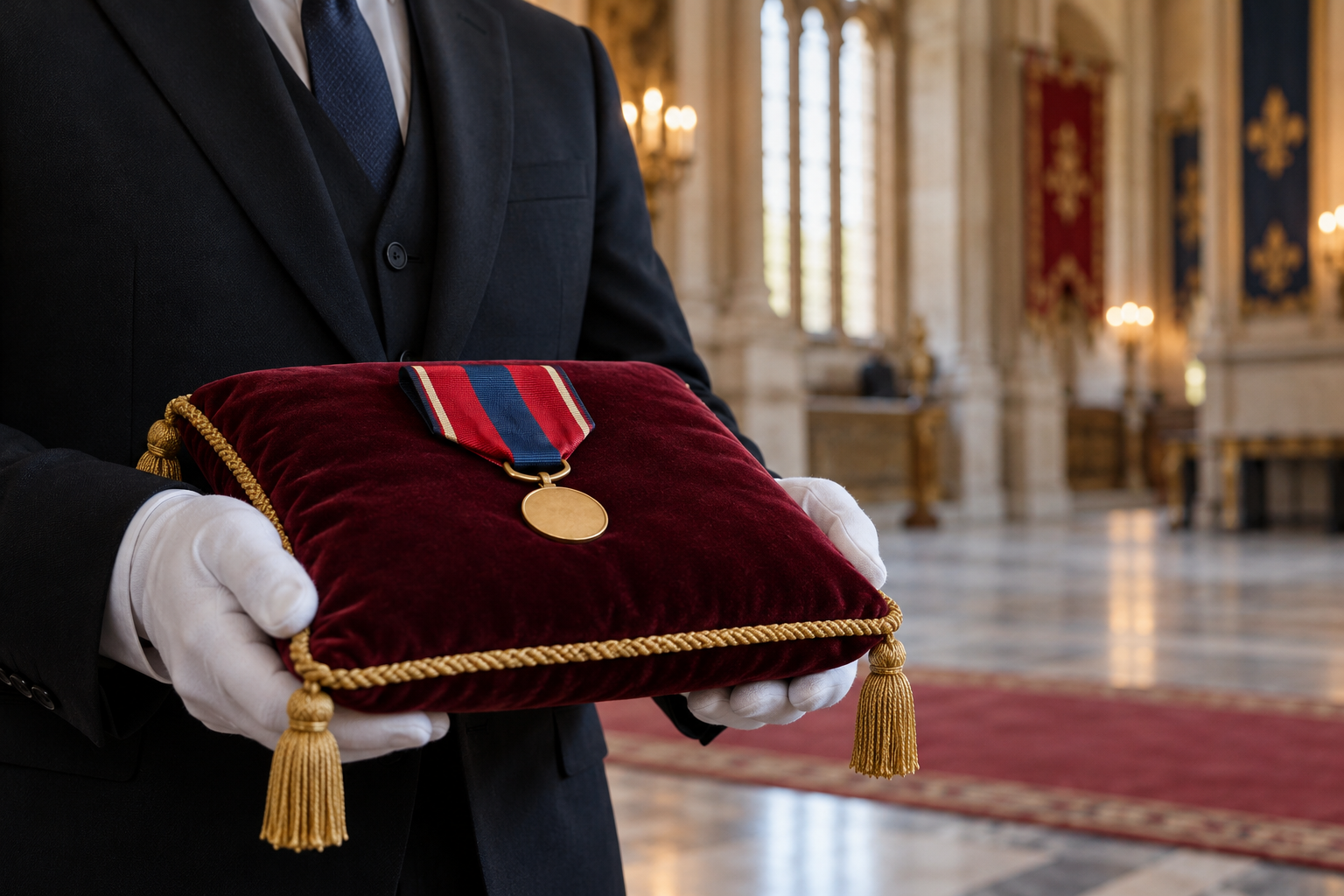
Modern knighthood meaning: UK honours today
In present-day UK public life, honours recognise notable service, achievement, or contribution. People can make nominations for a national honour, but the nomination process does not let someone select a particular honour for a nominee. That point matters because misleading services sometimes imply that a title can be purchased or guaranteed.
The official GOV.UK nomination guidance describes how a member of the public can nominate someone and what evidence helps a nomination. It does not promise an outcome. A responsible article should say exactly that: nomination is an opportunity to make a case for recognition, not a route to buy status or secure a title.
The phrase modern knighthood meaning therefore needs context. A modern honour can recognise public service, work in the arts, charity, science, community contribution, or other achievement. It is not a licence to expect deference, control other people, or claim medieval privileges.
Orders of chivalry and the Order of the Garter
An order of chivalry is an institution of honour with its own history, rules, insignia, and traditions. The Order of the Garter is Britain’s oldest and most senior order of chivalry. The Royal Family’s official page states that it was founded in 1348, is associated with Edward III, and today includes the Sovereign, senior members of the Royal Family, and a limited number of companions chosen for their work. The Royal Family: The Order of the Garter should be checked for any current membership or ceremony detail because those facts can change.
The page also notes that the order includes both men and women today. That is a good example of why it is inaccurate to speak as if every modern order simply preserves an unchanged medieval social world. Historical inspiration and modern institutions are related, but they are not identical.
This article keeps the broader comparison here. The forthcoming guide to Orders of Chivalry and Knighthood Today will focus on how orders differ from ordinary use of the word “knighthood,” so these pages do not fight for the same reader question.
Can anyone become a knight today?
The safest answer is: people can be recognised through the current honours system, but no one can buy, demand, or guarantee a knighthood. Eligibility and selection depend on the rules of the relevant honours system. If you want to recognise somebody’s sustained public contribution, use the official nomination process rather than a paid intermediary that promises a title.
The question can also mean something personal: can anyone practise the values people associate with a knight? In that modern ethical sense, courage, reliability, restraint, fairness, and useful service are not restricted by gender, title, nationality, or social class. That is not medieval history; it is a contemporary interpretation. Our Modern Chivalry guide explains why that interpretation must include consent and equality.
Common mistakes to avoid
- Treating a medieval status as a job description with one pathway. Training and recognition varied.
- Calling every person in armour a knight. Military life involved many roles.
- Treating a code of honour as a universally enforced law. Ideals and conduct were not the same.
- Confusing a nomination with an award. A nomination does not guarantee a result or a chosen honour.
- Using modern honours as proof of personal superiority. An honour recognises contribution; it does not make ordinary accountability optional.
Frequently asked questions
Is knighthood still a thing?
Yes, in the sense of modern honours and orders in some countries, including the United Kingdom. It does not function as the medieval military status associated with mounted service.
Can women receive the equivalent of a knighthood?
UK honours include Dame titles and women are included in modern orders of chivalry. Specific forms of recognition depend on the current honours system and its rules.
Were all medieval knights noble?
No simple answer covers every place and period. Status, land, service, and recognition varied. It is safer to discuss a particular region and century than make a universal claim.
Is the Order of the Garter the same as a knighthood?
It is a specific order of chivalry, not a generic synonym for every knighthood. Its history, membership, and ceremonies are institution-specific.
The useful distinction
Knighthood becomes clearer when we stop asking one word to carry every meaning. Medieval knighthood belonged to a changing world of warfare, service, wealth, and hierarchy. Modern honours recognise contributions under a current institutional system. Arthurian stories turn knightly ideals into literature. Modern people can still discuss courage and responsibility without pretending that any of those worlds are the same.
If you want to reflect on everyday conduct rather than rank or title, take the Chivalry Test. It is designed for conversation and self-reflection, not as a claim to certify anyone’s character.
Sources and further reading
- Metropolitan Museum of Art — Feudalism and Knights in Medieval Europe
- Metropolitan Museum of Art — Arms and Armor: Common Misconceptions
- GOV.UK — Types of honours and awards
- GOV.UK — Nominate someone for a UK national honour
- The Royal Family — The Order of the Garter
Historical and institutional context is supported by the sources above. The modern reflection examples are original editorial content.
Reflect on your choices through practical scenarios.
Take the test